Hippocratic Oath Of Today
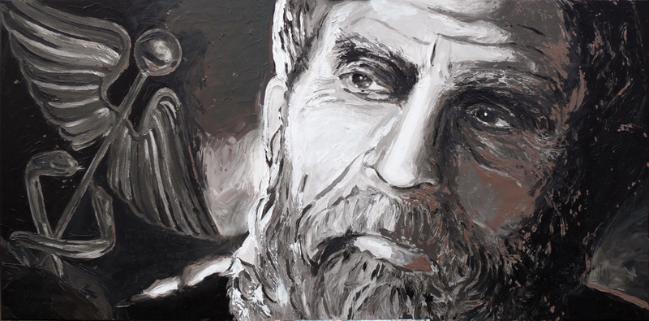
Comparing the Original Oath to the new one, this Modern Hippocratic Oath (or what we will call MHO on this page) written by Louis Lasagna, Academic Dean of the School of Medicine at Tuffs University, 1964, starts off by eliminating the vows to the healing gods Asclepius, Hygieia and Panacea; and pledges to the concept of science, which Hippocrates, believes is the superior technique of the practice. Next in the MHO version, it dismisses the family tie between the teacher and student. The MHO goes on to explain, that all measures will be taken to benefit the sick, but the practitioner, will try to avoid making the same maltreatment twice, or royally screwing up. Following, the physician vows to understand that sympathy, warmth, and understanding may out weight, the surgery and drug treatment; and acknowledged one should not pretend to be god, sometimes the physician will find themselves being able to alter the patients life or death at times. The ending of the MHO, covers treating the patient as a whole, and not just parts. It also takes in consideration the patient’s family, making sure the hardship of economics and mental stability is taken into mind. MHO concludes, the physician will preserve the tradition and the practice of medicine, without taking in the consideration, the consequence’s of malpractice of some sort, and what the result of out come may be.
Hippocratic Oath: Modern Version
I swear to fulfill, to the best of my ability and judgment, this covenant:
I will respect the hard-won scientific gains of those physicians in whose steps I walk, and gladly share such knowledge as is mine with those who are to follow.
I will apply, for the benefit of the sick, all measures [that] are required, avoiding those twin traps of overtreatment and therapeutic nihilism.
I will remember that there is art to medicine as well as science, and that warmth, sympathy, and understanding may outweigh the surgeon's knife or the chemist's drug.
I will not be ashamed to say "I know not," nor will I fail to call in my colleagues when the skills of another are needed for a patient's recovery.
I will respect the privacy of my patients, for their problems are not disclosed to me that the world may know.
Most especially must I tread with care in matters of life and death. If it is given me to save a life, all thanks. But it may also be within my power to take a life; this awesome responsibility must be faced with great humbleness and awareness of my own frailty. Above all, I must not play at God.
I will remember that I do not treat a fever chart, a cancerous growth, but a sick human being, whose illness may affect the person's family and economic stability. My responsibility includes these related problems, if I am to care adequately for the sick.
I will prevent disease whenever I can, for prevention is preferable to cure.
I will remember that I remain a member of society, with special obligations to all my fellow human beings, those sound of mind and body as well as the infirm.
If I do not violate this oath, may I
enjoy life and art, respected while I live and remembered with affection
thereafter. May I always act so as to preserve the finest traditions of my calling and may I long experience the joy of healing those who seek my help. |
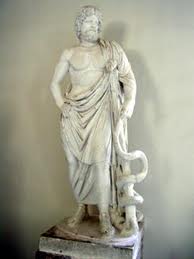 Asclepius - god of healing | 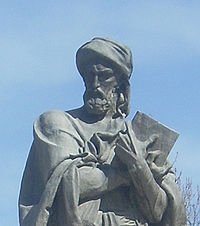 Hippocrates - father of Western Medicine |
In its extent, the Modern Hippocratic Oath, is still trying to honor the wisdom of Hippocrates, by contouring to the present time of medicine, looking out for the patient’s well being, and by having sympathy for the patients struggle through the healing process. Although, it says something, when one does not honor their god, elders, or teacher to the extent one should. The beginnings of truly learning what the idea of respect portrays, starts in the beginning of life, by learning to honor your thy parents, the way one learns this concept, will shape how a person will treat others down the road. If one can not respect one's parents, how do you expect them to treat others. Also, by playing down the last phrase of the original oath (the part were if the physician did not violate the oath, good fortune and fame would come of them, and if they did violate the oath, the opposite would happen), to a simple, "If I do not violate the oath, I may enjoy my practice and preserve the art," is taking the importance out of the message. Which is suppose to come across and enlighten the new physician. Making it aware, to make a vow, to the universal law of, “What goes around, come around,” which would keep the physician in check; knowing that if they did bad to someone, bad would happen to them. With this said, some people in the world today, believe the western doctors are not in the practice for the patient any more, but in it for the fame and fortune. People now, are looking for practitioners that follow the path of concern for the patient, and doing treatment as natural as possible.
